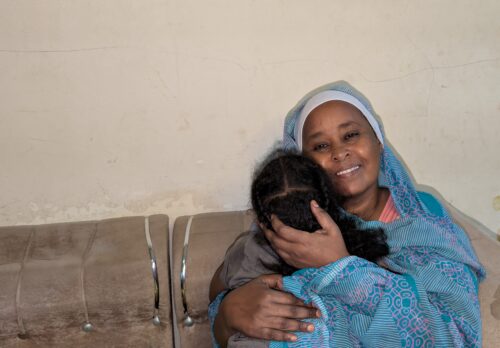
Drawing therapy helps children recover from warzone trauma
Before I tell you about a conflict, let me tell you about a laugh. It belongs to my sister Lia. It is loud and a little chaotic, the kind that spills out of her without warning and fills every corner of a room. She is six years old. She likes colouring. She fills pages with bright yellows and soft pinks, pressing the crayon down slowly, carefully, like someone who has learned that calm is something you have to practise.
But she wasn’t always this free. The last normal morning I remember was Saturday, 15th April 2023. Lia was three. She was dancing. Our mother Nada was cooking. Outside, Khartoum smelled like it always did before Eid: warm bread, incense, Eid songs, distant prayers, something about to begin.
Then the missiles came. Their sound shook Lia’s little body. I held her close and told her it was just fireworks for the celebration, that everything was fine. But soon I was rushing her under the bed every time I heard bullets and fire, her small body learning a reflex it would carry long after the shooting stopped.
It took our family three months to leave Khartoum. The nightmares came with us. My sister would wake in the middle of the night with hysterical crying. The tantrums and hyperactivity grew. And later in Egypt, a new country, she began biting her nails until her fingers bled. She didn’t cry. Not once. As if she had stopped feeling pain altogether.
“It took our family three months to leave Khartoum. The nightmares came with us”
According to Save the Children, more than 10 million children in Sudan were in an active warzone in the first year of the conflict; half the country’s children, within reach of gunfire, shelling and missile blasts. Some 14 million people have been forced to flee their homes, making Sudan’s the world’s largest child displacement crisis. UNICEF warns that exposure to violence manifests in children as depression, nightmares, aggression and withdrawal.
Dr Walaa is a child therapist who works with conflict-affected children through Volunteer Hub Organisation, a youth-led NGO based in Egypt. She explains why the very young are especially vulnerable: “These symptoms become most visible around age six when entering school places the child’s coping mechanisms under pressure for the first time, and behaviours that went unnoticed at home suddenly become apparent.”
Nada watched her daughter’s transformation helplessly. “I wouldn’t be exaggerating when I say she became completely different,” she says. “She used to be carefree, eager to grow up, excited to start preschool. After the war, she became angry almost all the time, didn’t want to go out, and when she did it would take only minutes before she was crying to go home.” When school finally started, the struggle continued. “She would cry and make a fuss every single day, although she’s smart and doing well, it’s always hard to get her there.”
For Nada, the hardest part was not knowing how to reach Lia. “I felt that loving her was not enough. Hugging and reassuring her helped sometimes but not always. It was hard to know exactly what she needed.”
“More than 10 million children in Sudan were in an active warzone in the first year of the conflict”
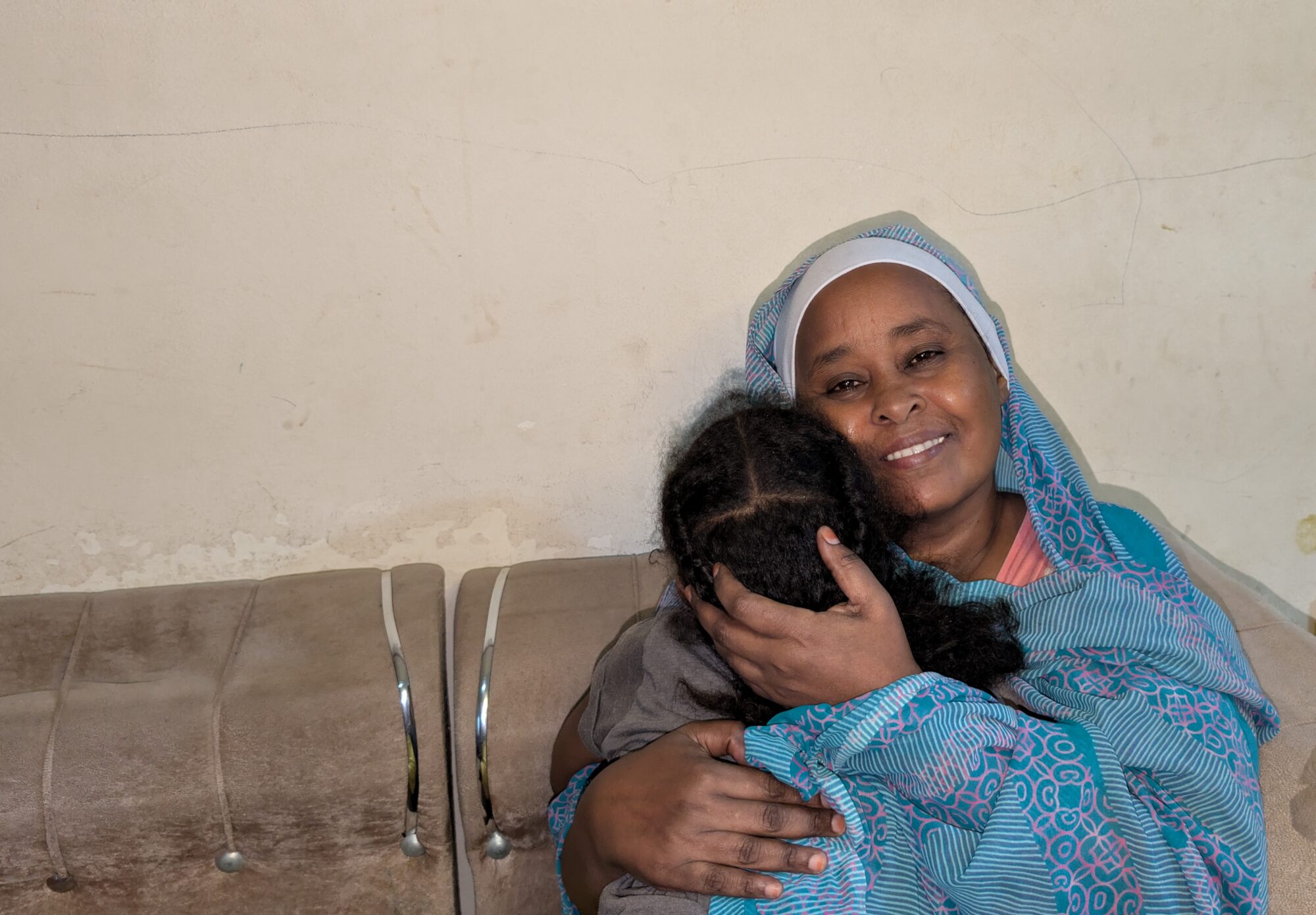
That changed when Nada was introduced to Volunteer Hub Organisation, where Lia began weekly sessions with Dr Walaa. The therapist placed coloured pencils in front of her, giving her emotions somewhere to go. “Children lack the ability to translate trauma into words,” Dr Walaa explains. “Drawing is a safe space where they give physical form to a fear they cannot describe.”
The change was gradual, then undeniable. In her first sessions, Lia drew monsters, dark figures with fangs and furrowed brows, pressing the crayon down hard, filling the page with everything she couldn’t say. Then one day she drew her older sister. Glasses. A smile. It was the first smile she had ever drawn.
“Drawing is a safe space where they give physical form to a fear they cannot describe”
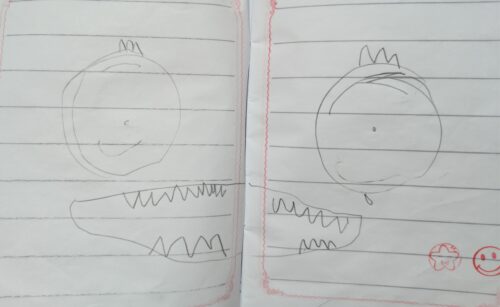
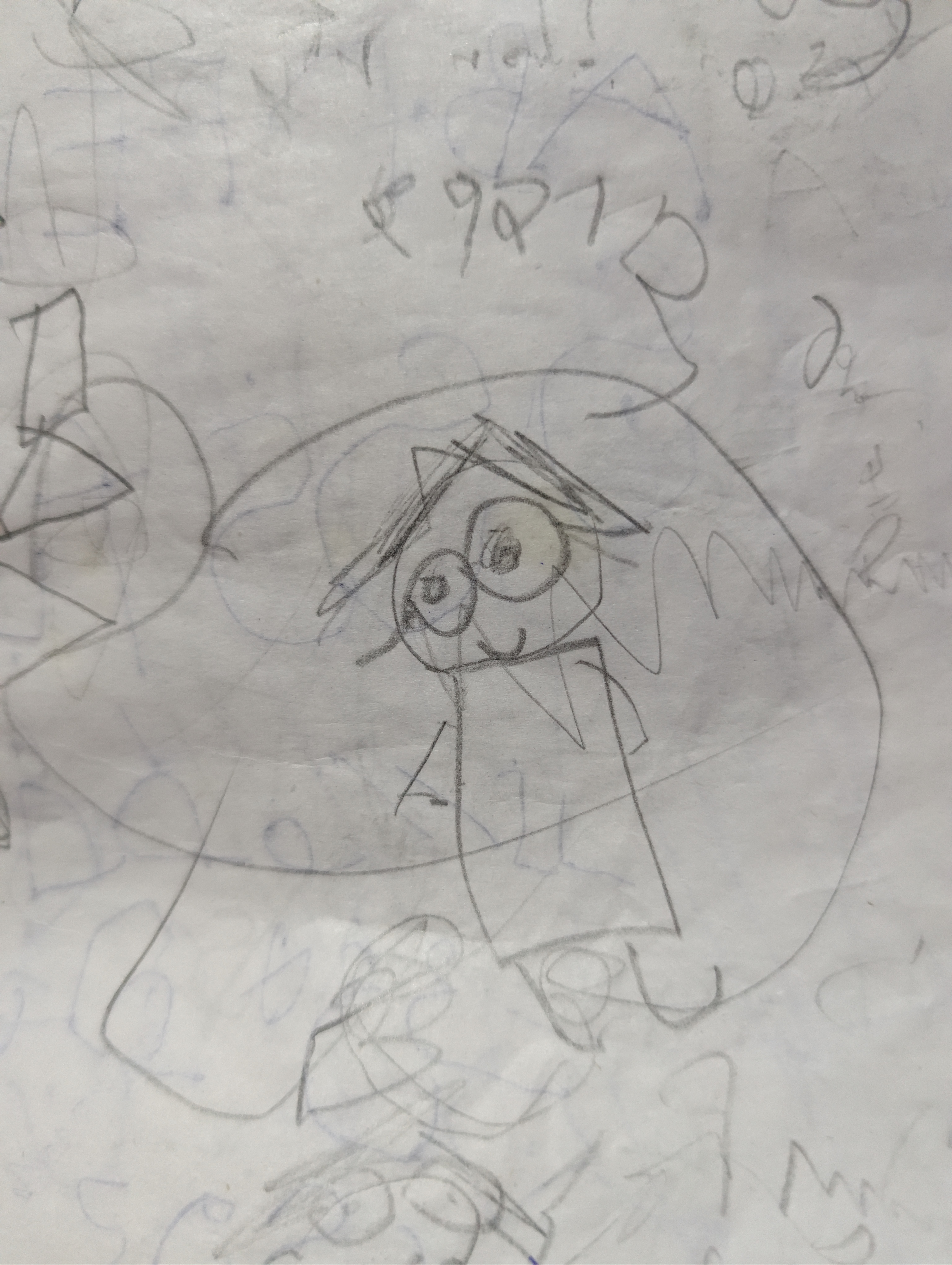
“The most prominent change was her stopping the nail-biting,” Nada recalls. “Her little fingertips would bleed as if cut by a knife. Then she became calmer and she started to express openly when she was sad or angry.”
Recovery, Dr Walaa reminds us, is not a straight line. “It means building psychological resilience, learning to live with what happened without allowing it to control your present and future.” Untreated, she explains, trauma follows children into the classroom, shutting down concentration, memory and the ability to trust.
“[Recovery] means learning to live with what happened without allowing it to control your present and future”
Lia started school this year. Some days are harder than others. But she goes. She sits down. She tries. That shift did not happen by accident. It happened because someone made her feel safe enough to feel. Fifteen million Sudanese children are still waiting for that chance. A safe place to learn must first be a safe place to heal. One cannot exist without the other.
They are still waiting. The question is whether the world is listening.
Please note: Some names have been changed to protect the participants’ identities.